
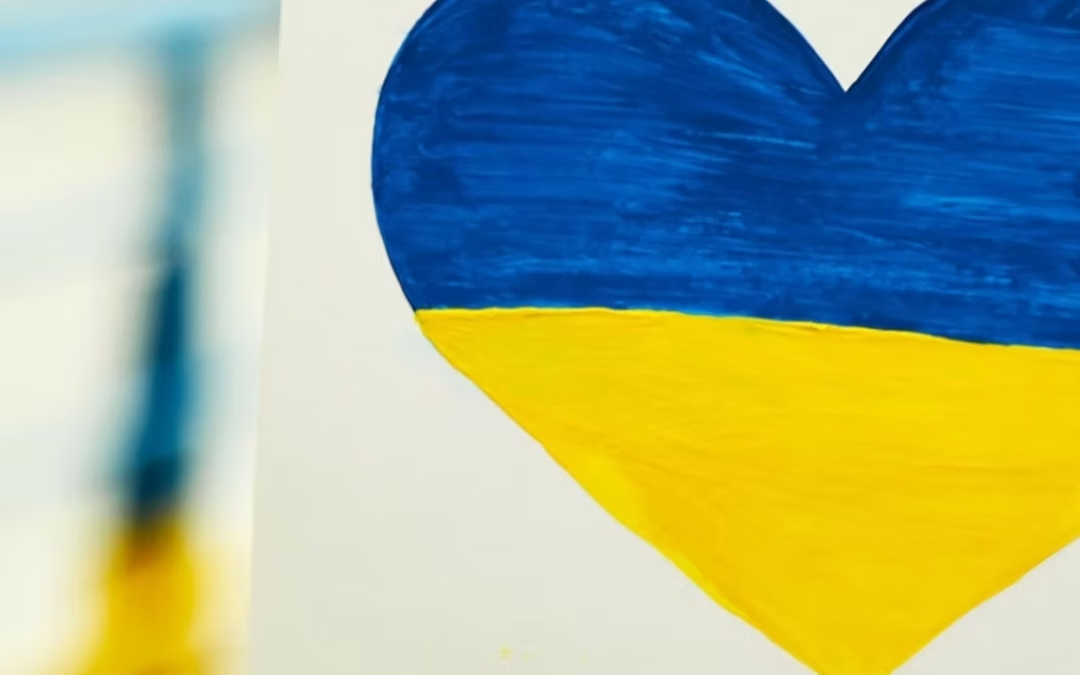
On 24 February 2022, Russia’s full‑scale invasion of Ukraine forced millions to leave their homes. In the intervening years over two hundred thousand people have found safety and hope in the United Kingdom.
Now, as the war in Ukraine enters its fourth year, the experiences of Ukrainians living here tell a story of resilience, adaptation, achievement—and the lingering uncertainty of lives in transition.
How Many Ukrainians Have Come to the UK?
Since March 2022, when the UK introduced humanitarian visa routes for people fleeing the war, more than 218,000 Ukrainians have arrived through the Homes for Ukraine Sponsorship Scheme and the Ukraine Family Scheme.
While not everyone has stayed permanently—some have returned to Ukraine or moved elsewhere—it’s estimated that around 217,000 Ukrainians, mostly women and children, were living in the UK by mid‑2024.
Ukrainians working in the UK
Finding work has been both a necessity for Ukrainian people in the UK, and a vital step toward feeling settled. Early surveys showed that employment among Ukrainians grew quickly: by mid‑2022, nearly half of adults arriving were already in work, and by 2024, about two‑thirds of Ukrainian adults in the UK were employed or self‑employed.
Many Ukrainians in the UK bring training, education and high-level skills, yet most are working in different sectors than they did in Ukraine. About two‑thirds of those employed in the UK are working outside their previous fields.
Supporting Ukrainians as they build their lives in the UK
Behind the numbers and statistics are personal stories of adaptation, achievement, and connection. Families and individuals are rebuilding careers, nurturing cultural roots, and contributing to local communities. Many Ukrainian Children have only ever known a UK education; their lives are deeply rooted here. These stories highlight not only resilience, but also the power of community and hospitality.
There are still great levels of uncertainty for Ukrainians living in the UK, Humanitarian visa routes do not currently lead to permanent settlement or count toward long-term residency, leaving many Ukrainians unsure about their future. Extensions provide temporary relief, but long-term security is still out of reach.
Many highly qualified Ukrainians work in roles below their skill level, due to challenges with qualification recognition and language barriers. This underemployment affects not only finances but also long-term career prospects.
Finding stable, affordable housing has often lagged behind employment progress. Temporary status and rising living costs make each step toward independence more complicated.
Living far from home, while loved ones remain in war zone, carries a profound emotional toll. Families and individuals are navigating uncertainty, separation, and the ongoing stress of war from afar.
As the fourth anniversary of the war passes, the Ukrainian community in the UK stands at a crossroads: integrated yet unsettled, skilled yet under‑utilized, contributing yet constrained by immigration policies.
Their journey is a testament to the impact of war, the strength of human resilience, and the warmth of shared support.
Moseley For Ukraine
Moseley for Ukraine was formed in winter 2022, when local volunteers came together to support Ukraine following the full-scale invasion. Initially, the group raised funds and essential supplies for Ukraine, then went on to connect Ukrainian arrivals with UK hosts through the Homes for Ukraine programme, helping families settle and adapt in Moseley and across Birmingham.
Today, Moseley for Ukraine is a well-known support hub for Ukrainians in Birmingham, offering information, weekly drop-in sessions, and community events focused on wellbeing, employment, housing, language learning, and integration. As part of Moseley Community Development Trust, led by Ukrainian women who arrived through the Homes for Ukraine scheme, the project continues to help Ukrainians rebuild their lives and feel at home in the UK.
Ultimately, the story of Ukrainians in the UK is one of determination, courage, and community—yet also of unfinished chapters. In the years ahead, security, recognition, and the right to truly belong remain at the heart of their journey.
Recent Comments